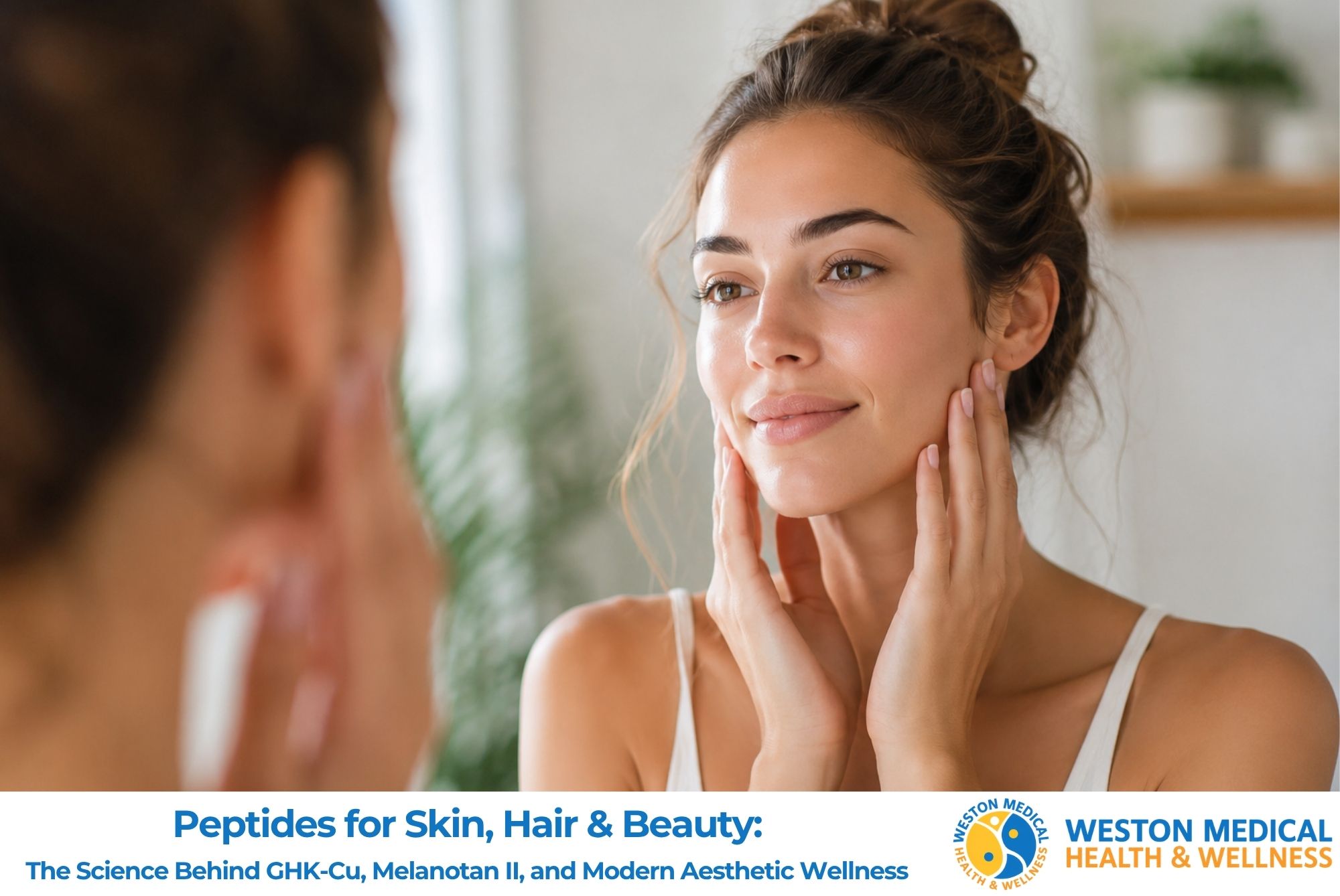
The world of health optimization and aesthetic medicine is evolving rapidly, and peptides are leading the conversation. From improving skin elasticity and stimulating collagen production to supporting hair restoration and enhancing overall appearance, peptides have become one of the most talked-about wellness trends in modern medicine.
At Weston Medical Health & Wellness, patients are increasingly exploring advanced peptide therapies to support healthy aging, skin rejuvenation, body composition, and wellness optimization. Understanding how these compounds work—and separating science from hype—is essential for making informed decisions about your health and appearance.
In this guide, we’ll take a deep dive into peptide therapy for beauty and wellness, including popular compounds like GHK-Cu (Copper Peptide) and Melanotan II, their benefits, safety considerations, and what patients should know before beginning treatment.
What Are Peptides?
Peptides are short chains of amino acids that serve as signaling molecules within the body. They help regulate numerous biological functions including:
- Collagen production
- Tissue repair
- Hormone signaling
- Skin regeneration
- Hair follicle stimulation
- Muscle recovery
- Fat metabolism
- Inflammation reduction
Because peptides naturally occur in the body, many are being studied for their therapeutic and cosmetic potential.
In aesthetic and wellness medicine, peptides are often used to support:
- Anti-aging therapies
- Skin tightening and rejuvenation
- Hair restoration
- Recovery optimization
- Weight management
- Longevity protocols
Why Peptides Are Trending in Aesthetic Medicine
Peptides have gained significant popularity because many patients are searching for alternatives to invasive cosmetic procedures. While treatments like fillers and surgery still have their place, peptide therapy may offer a more regenerative and holistic approach.
Potential advantages include:
- Non-surgical support for skin quality
- Cellular repair and regeneration
- Improved hydration and elasticity
- Support for healthy aging
- Potential stimulation of collagen and elastin
- Hair growth support
- Enhanced wellness and recovery
Social media, celebrity wellness trends, and advances in regenerative medicine have all contributed to the growing demand for peptide therapies.
GHK-Cu (Copper Peptide): The Anti-Aging Peptide Everyone Is Talking About
One of the most popular peptides in the aesthetic world today is GHK-Cu, commonly known as the Copper Peptide.
What Is GHK-Cu?
GHK-Cu is a naturally occurring copper-binding peptide found in human plasma, saliva, and urine. Researchers have studied it extensively for its regenerative and anti-aging properties.
It has become especially popular for:
- Skin rejuvenation
- Collagen stimulation
- Hair restoration
- Wound healing
- Anti-inflammatory support
As we age, natural levels of GHK-Cu decline, which may contribute to visible signs of aging.
Benefits of GHK-Cu for Skin
1. Collagen Production
GHK-Cu is widely recognized for helping stimulate collagen synthesis. Collagen is essential for:
- Firm skin
- Reduced wrinkles
- Improved elasticity
- Youthful texture
As collagen naturally decreases with age, skin may become thinner and more fragile. Copper peptides are often incorporated into anti-aging protocols to help support healthier-looking skin.
2. Skin Repair & Regeneration
Research suggests GHK-Cu may:
- Support tissue remodeling
- Reduce oxidative stress
- Improve skin healing
- Help diminish signs of sun damage
Many skincare formulations now include copper peptides due to their regenerative potential.
3. Improved Skin Tone & Texture
Patients interested in smoother, brighter, and healthier-looking skin often explore peptide-based therapies because they may help:
- Minimize fine lines
- Improve skin density
- Enhance hydration
- Support overall skin quality
GHK-Cu for Hair Growth
Copper peptides have also become increasingly popular in hair restoration programs.
Potential benefits may include:
- Supporting healthier hair follicles
- Improving scalp circulation
- Reducing inflammation around follicles
- Promoting thicker-looking hair
Some studies suggest GHK-Cu may help prolong the hair growth phase and improve follicular function.
Patients experiencing:
- Hair thinning
- Early hair loss
- Aging-related shedding
- Weak or brittle hair
may consider discussing peptide therapies with a qualified medical professional.
How GHK-Cu Is Used
GHK-Cu may be administered through:
- Topical serums
- Creams
- Injectable therapies
- Microneedling protocols
- Hair restoration programs
The ideal delivery method depends on a patient’s goals and medical evaluation.
Melanotan II: The Controversial Tanning Peptide
Another peptide that has generated significant online attention is Melanotan II.
What Is Melanotan II?
Melanotan II is a synthetic peptide originally developed to stimulate melanin production in the body. Melanin is the pigment responsible for skin color and tanning.
Online popularity has surged due to claims involving:
- Faster tanning
- Darker skin tone
- Reduced sun exposure needs
- Cosmetic appearance enhancement
However, it is important to understand that Melanotan II remains controversial.
Is Melanotan II FDA-Approved?
No. Melanotan II is not FDA-approved for cosmetic or tanning use in the United States.
Patients should be cautious about purchasing peptides online from unregulated sources, as product purity and safety may vary significantly.
Potential Risks of Melanotan II
Although some individuals pursue Melanotan II for aesthetic purposes, potential concerns may include:
- Nausea
- Flushing
- Appetite suppression
- Changes in moles or pigmentation
- Increased skin sensitivity
- Unknown long-term safety profile
Because of these concerns, medical supervision is essential when discussing any peptide therapy.
The Importance of Medical Supervision for Peptide Therapy
Peptides should never be viewed as “magic” cosmetic shortcuts.
A qualified medical provider can help:
- Evaluate candidacy
- Review medical history
- Assess safety concerns
- Recommend evidence-based protocols
- Monitor results and side effects
At Weston Medical Health & Wellness, patient education and individualized care remain essential components of wellness planning.
Other Popular Beauty & Wellness Peptides
Beyond GHK-Cu and Melanotan II, many additional peptides are being explored for health optimization and aesthetic support.
BPC-157
Often discussed for:
- Recovery support
- Tissue healing
- Inflammation management
CJC-1295 & Ipamorelin
Commonly associated with:
- Growth hormone support
- Recovery
- Sleep optimization
- Healthy aging
Thymosin Beta-4
Studied for:
- Tissue repair
- Recovery enhancement
- Regenerative applications
Epitalon
Popular in longevity-focused wellness discussions for:
- Cellular health
- Anti-aging support
- Sleep regulation
Peptides and Anti-Aging Medicine
Modern anti-aging medicine increasingly focuses on:
- Prevention
- Regeneration
- Hormonal optimization
- Cellular repair
- Wellness longevity
Peptides fit into this evolving landscape because they may support the body’s natural repair systems instead of simply masking symptoms.
When combined with:
- Nutrition
- Exercise
- Hormone optimization
- Sleep management
- Medical weight loss
- Wellness planning
patients may experience more comprehensive health benefits.
Are Peptides Safe?
Safety depends on:
- The specific peptide
- Product quality
- Proper dosing
- Medical oversight
- Individual health status
Patients should avoid:
- Unregulated online peptide suppliers
- Self-injecting without guidance
- Social media “biohacking” advice
- Non-medical aesthetic recommendations
A personalized medical consultation is the safest way to explore whether peptide therapy may align with your goals.
Who May Benefit From Peptide Therapy?
Peptide therapy may be considered by individuals interested in:
- Healthy aging
- Skin rejuvenation
- Hair restoration
- Wellness optimization
- Recovery support
- Weight management
- Energy enhancement
However, every patient requires individualized evaluation.
Comprehensive Q&A About Peptides for Skin, Hair & Beauty
What are peptides used for in aesthetic medicine?
Peptides are commonly explored for skin rejuvenation, collagen support, hair growth, recovery optimization, and healthy aging protocols.
Does GHK-Cu really stimulate collagen?
Research suggests GHK-Cu may support collagen production and tissue regeneration, which is why it has become popular in anti-aging skincare and wellness treatments.
Can copper peptides help hair loss?
Copper peptides may support healthier hair follicles and scalp health, potentially helping improve hair appearance and thickness in some individuals.
Is GHK-Cu safe?
GHK-Cu is generally considered promising in research settings, but all peptide therapies should be discussed with a licensed medical provider before use.
What is Melanotan II used for?
Melanotan II is primarily known online for tanning and cosmetic enhancement purposes through stimulation of melanin production.
Is Melanotan II legal?
Melanotan II is not FDA-approved in the United States for tanning or cosmetic use.
Are peptide injections safe?
Peptide injections should only be administered under medical supervision using properly sourced compounds from reputable providers.
How long does peptide therapy take to work?
Results vary depending on the peptide, treatment plan, and patient goals. Some individuals report noticeable changes within weeks, while others require longer treatment periods.
Can peptides replace cosmetic surgery?
Peptides are not surgical replacements, but they may complement non-invasive aesthetic and wellness programs.
Do peptides help with anti-aging?
Many peptides are being researched for their potential role in healthy aging, tissue repair, collagen production, and cellular support.
Can peptides improve skin quality?
Certain peptides may help improve hydration, elasticity, texture, and overall skin appearance.
Are peptides natural?
Many peptides mimic naturally occurring amino acid sequences already found in the body.
Who should avoid peptide therapy?
Individuals with certain medical conditions, medication interactions, or contraindications should consult a healthcare provider before beginning peptide treatment.
Can peptides help with recovery and wellness?
Some peptides are being studied for recovery support, inflammation reduction, and regenerative medicine applications.
Where can I learn more about peptide therapy?
Scheduling a consultation with a qualified wellness provider is the best way to discuss safe, evidence-based peptide options.
Explore Personalized Wellness at Weston Medical Health & Wellness
As interest in regenerative medicine and aesthetic wellness continues to grow, peptide therapies remain one of the most exciting areas of modern health optimization. Whether you are interested in skin rejuvenation, healthy aging, hair restoration, or overall wellness support, professional medical guidance is essential.
The team at Weston Medical Health & Wellness is committed to helping patients explore individualized wellness strategies designed around their personal goals and long-term health.
Contact Information
Weston Medical Health & Wellness
1605 Town Center Blvd, Suite D
Weston, FL 33326
📞 Phone: (954) 389-1800
🌐 Website: westondiet.com
📅 Book An Appointment: https://westondiet.com/appointments/