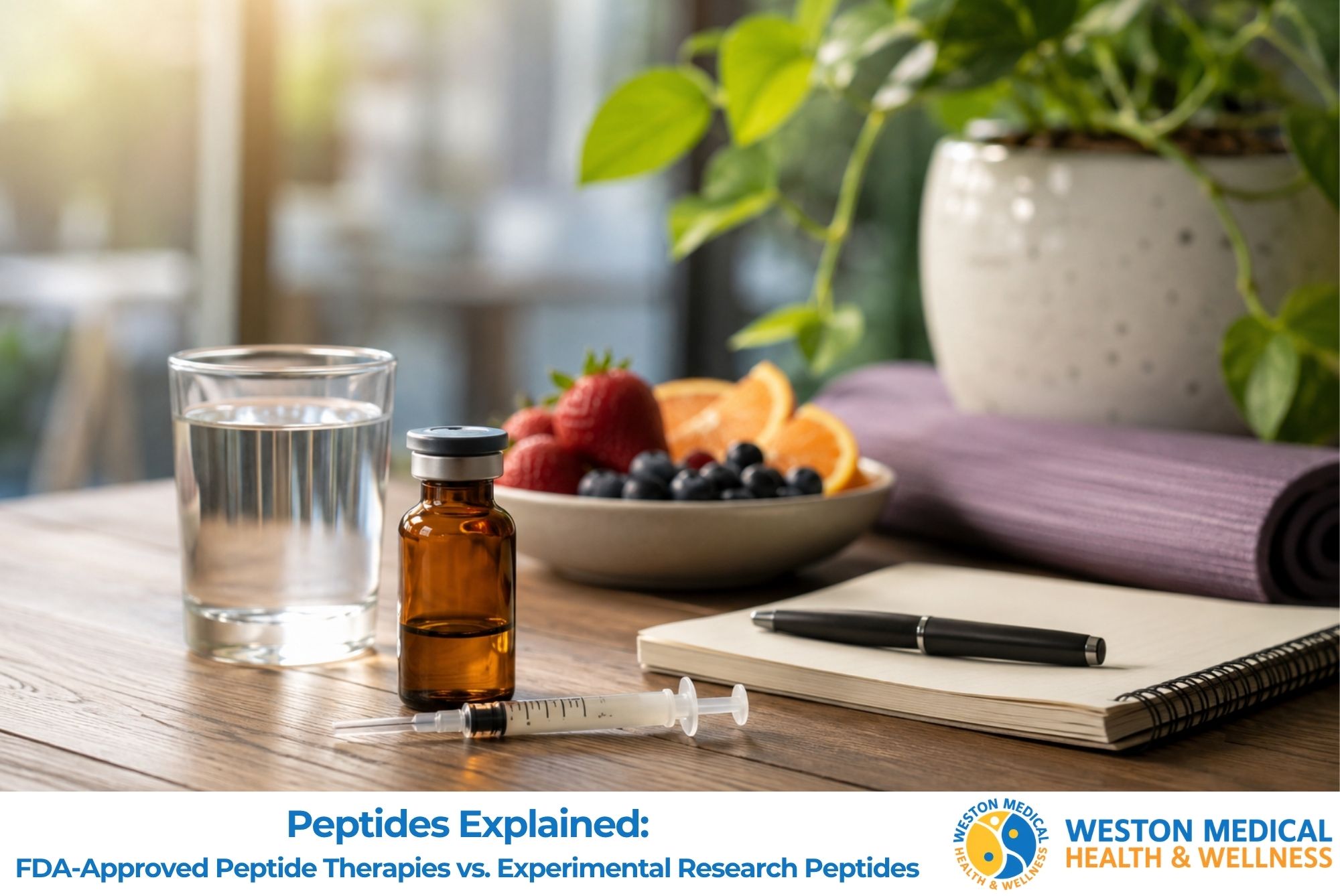
 Peptides have become one of the most discussed topics in modern health, wellness, weight management, and regenerative medicine. From medically supervised weight loss treatments to experimental compounds sold online, the growing popularity of peptides has also created significant confusion.
One of the most common questions patients ask is:
What’s the difference between FDA-approved peptide medications and “research peptides” sold on the internet?
The answer is important. While some peptides are FDA-approved medications that have undergone extensive clinical testing, others are experimental compounds that lack regulatory oversight and safety data.
In this guide, we’ll explain what peptides are, how they work, the differences between approved and experimental options, and what patients should know before considering peptide therapy.
What Are Peptides?
Peptides are short chains of amino acids that function as signaling molecules within the body. They help regulate numerous biological processes, including:
- Hormone production
- Metabolism
- Muscle growth
- Tissue repair
- Immune function
- Appetite regulation
- Sleep cycles
- Energy balance
Think of peptides as messengers that help cells communicate and perform specific functions. Some peptides occur naturally in the body, while others are synthesized for medical use.
Why Are Peptides So Popular?
Peptide therapies have gained attention because they may support:
- Medical weight loss
- Blood sugar management
- Muscle preservation
- Recovery and healing
- Energy optimization
- Healthy aging
- Hormonal balance
- Metabolic health
However, not all peptide therapies are the same. Understanding the distinction between FDA-approved medications and experimental research peptides is essential for making informed healthcare decisions.
FDA-Approved Peptide Medications
FDA-approved peptide medications undergo rigorous evaluation, including:
- Clinical trials
- Safety testing
- Quality control assessments
- Manufacturing oversight
- Physician supervision
These medications are prescribed for specific medical conditions and have scientific evidence supporting their effectiveness and safety.
Semaglutide
Semaglutide is a GLP-1 receptor agonist that works by:
- Reducing appetite
- Slowing stomach emptying
- Supporting blood sugar regulation
- Increasing feelings of fullness
It is commonly prescribed for:
- Chronic weight management
- Type 2 diabetes
- Metabolic health support
Popular FDA-approved brands include:
- Ozempic®
- Wegovy®
- Rybelsus®
Tirzepatide
Tirzepatide works on both:
- GLP-1 receptors
- GIP receptors
This dual-action approach may help improve:
- Weight loss outcomes
- Blood sugar control
- Metabolic efficiency
FDA-approved brands include:
- Mounjaro®
- Zepbound®
Other FDA-Approved Peptide Therapies
Additional peptide-based medications are used to treat conditions such as:
- Growth hormone deficiencies
- Fertility challenges
- Osteoporosis
- Hormonal disorders
- Diabetes management
These therapies are prescribed and monitored by healthcare professionals to help ensure patient safety.
What Are Research Peptides?
Research peptides are experimental compounds often marketed online with claims related to:
- Fat loss
- Anti-aging
- Muscle growth
- Injury recovery
- Cognitive enhancement
- Athletic performance
Many of these products carry labels such as:
- “For research use only”
- “Not for human consumption”
Despite these warnings, some individuals purchase and self-administer these compounds without medical supervision.
Commonly Discussed Research Peptides
Examples include:
- BPC-157
- TB-500
- CJC-1295
- Ipamorelin
- Melanotan II
- AOD-9604
- Sermorelin
- Hexarelin
- Tesamorelin (medical uses exist, but online versions vary widely)
Risks Associated with Research Peptides
Unlike FDA-approved medications, research peptides may:
- Lack clinical safety testing
- Contain contaminants
- Have inconsistent potency
- Be improperly dosed
- Be manufactured without regulatory oversight
- Cause unknown long-term side effects
Many online peptide vendors are not licensed pharmacies, meaning:
- Product labels may be inaccurate
- Ingredients may vary between batches
- Sterility may not be guaranteed
- Marketing claims may not be supported by scientific evidence
These factors make medical supervision especially important when considering peptide-related therapies.
Understanding GLP-1 Peptides
One of the most significant advancements in peptide medicine involves GLP-1 receptor agonists.
What Is GLP-1?
GLP-1 (glucagon-like peptide-1) is a hormone naturally produced in the intestines that helps regulate:
- Appetite
- Blood sugar levels
- Insulin secretion
- Digestion
GLP-1 medications are designed to mimic the actions of this hormone.
Benefits of Medically Supervised GLP-1 Therapy
When prescribed appropriately, GLP-1 therapies may help patients:
- Lose weight safely
- Improve metabolic health
- Reduce food cravings
- Improve blood sugar control
- Support cardiovascular health
- Maintain long-term wellness goals
How Peptides Support Weight Loss
Obesity is a complex metabolic condition, and peptide-based therapies may help address some of the biological factors involved.
Potential benefits include:
- Reduced hunger signals
- Lower calorie intake
- Improved insulin sensitivity
- Enhanced fat metabolism
- Preservation of lean muscle mass
For best results, medications should be combined with:
- Nutrition counseling
- Regular exercise
- Lifestyle modifications
- Ongoing medical monitoring
Peptides and Anti-Aging: What We Know
Certain peptides are currently being studied for their potential role in:
- Cellular repair
- Collagen production
- Recovery support
- Muscle maintenance
- Hormonal optimization
While early research is promising, many anti-aging claims remain experimental and have not yet been proven through large-scale clinical studies.
Patients should be cautious of marketing that promises dramatic or guaranteed anti-aging results.
Are Peptides Safe?
The safety of peptide therapy depends on several factors, including:
- The specific peptide used
- FDA approval status
- Product quality
- Medical supervision
- Proper dosing
- Individual health history
FDA-Approved Peptides
These medications have:
- Undergone extensive research
- Been manufactured under strict standards
- Received regulatory oversight
- Been approved for specific medical uses
Research Peptides
Research peptides may carry greater risks because they often:
- Lack regulatory oversight
- Have not been fully tested for safety
- Vary in purity and potency
Why Medical Supervision Matters
Before starting peptide therapy, patients should undergo:
- A medical evaluation
- Review of health history
- Laboratory testing when appropriate
- Ongoing monitoring
Self-prescribing peptides purchased online can increase the risk of:
- Side effects
- Drug interactions
- Incorrect dosing
- Contaminated products
- Serious health complications
Working with a qualified healthcare provider helps ensure safer and more effective treatment outcomes.
Potential Side Effects of Peptide Therapy
Side effects vary depending on the medication or peptide used.
Possible side effects may include:
- Nausea
- Vomiting
- Digestive discomfort
- Injection site irritation
- Headaches
- Fatigue
- Hormonal imbalances
- Blood sugar fluctuations
Serious complications can occur if therapies are used improperly or without appropriate monitoring.
Who May Benefit from FDA-Approved Peptide Therapy?
Some individuals who may benefit include those struggling with:
- Obesity
- Type 2 diabetes
- Metabolic syndrome
- Insulin resistance
- Appetite control challenges
- Weight-related health conditions
The most appropriate treatment plan depends on an individual’s medical history, health status, and wellness goals.
How to Choose a Reputable Peptide Provider
When exploring peptide therapy, look for providers who offer:
- Licensed medical professionals
- Evidence-based treatment plans
- FDA-compliant prescribing practices
- Comprehensive evaluations
- Ongoing monitoring
- Transparent communication
Be cautious of providers making claims such as:
- “Instant fat loss”
- “Miracle anti-aging cures”
- “Guaranteed results”
Quality healthcare focuses on long-term health outcomes—not hype.
Frequently Asked Questions About Peptides
Are all peptides FDA-approved?
No. Some peptides are FDA-approved medications, while many others sold online are experimental compounds that are not approved for human use.
What is the difference between semaglutide and research peptides?
Semaglutide is an FDA-approved medication that has undergone extensive testing and regulation. Many research peptides have not been fully evaluated for safety or effectiveness.
Is tirzepatide FDA-approved?
Yes. Tirzepatide is FDA-approved for certain medical conditions, including type 2 diabetes and chronic weight management under approved brand names.
Can peptides help with weight loss?
Certain FDA-approved peptide medications may support weight loss when used under medical supervision alongside healthy lifestyle changes.
Are peptides steroids?
No. Peptides and steroids are entirely different substances with different mechanisms of action.
Should I buy peptides online?
Consumers should exercise caution when purchasing peptides online due to concerns regarding product quality, safety, and regulation.
Final Thoughts
Peptides represent an exciting and rapidly evolving area of medicine, particularly in the fields of metabolic health and medically supervised weight management. However, understanding the difference between FDA-approved peptide medications and unregulated research peptides is critical for protecting your health.
FDA-approved medications such as semaglutide and tirzepatide have undergone rigorous clinical evaluation and should be used only under the guidance of qualified healthcare professionals. Research peptides sold online may carry significant risks due to limited oversight, inconsistent quality, and lack of safety data.
If you’re considering peptide therapy, partnering with an experienced medical provider can help ensure that your treatment plan is safe, evidence-based, and aligned with your long-term health goals.
Contact Weston Medical Health & Wellness
Weston Medical Health & Wellness
1605 Town Center Blvd, Suite D
Weston, FL 33326
Phone: (954) 389-1800
Website: westondiet.com
Book an Appointment: https://westondiet.com/appointments/